There are places in Johnstown that stop you in your tracks. St. Mary’s Byzantine Catholic Church on Power Street is one of them.
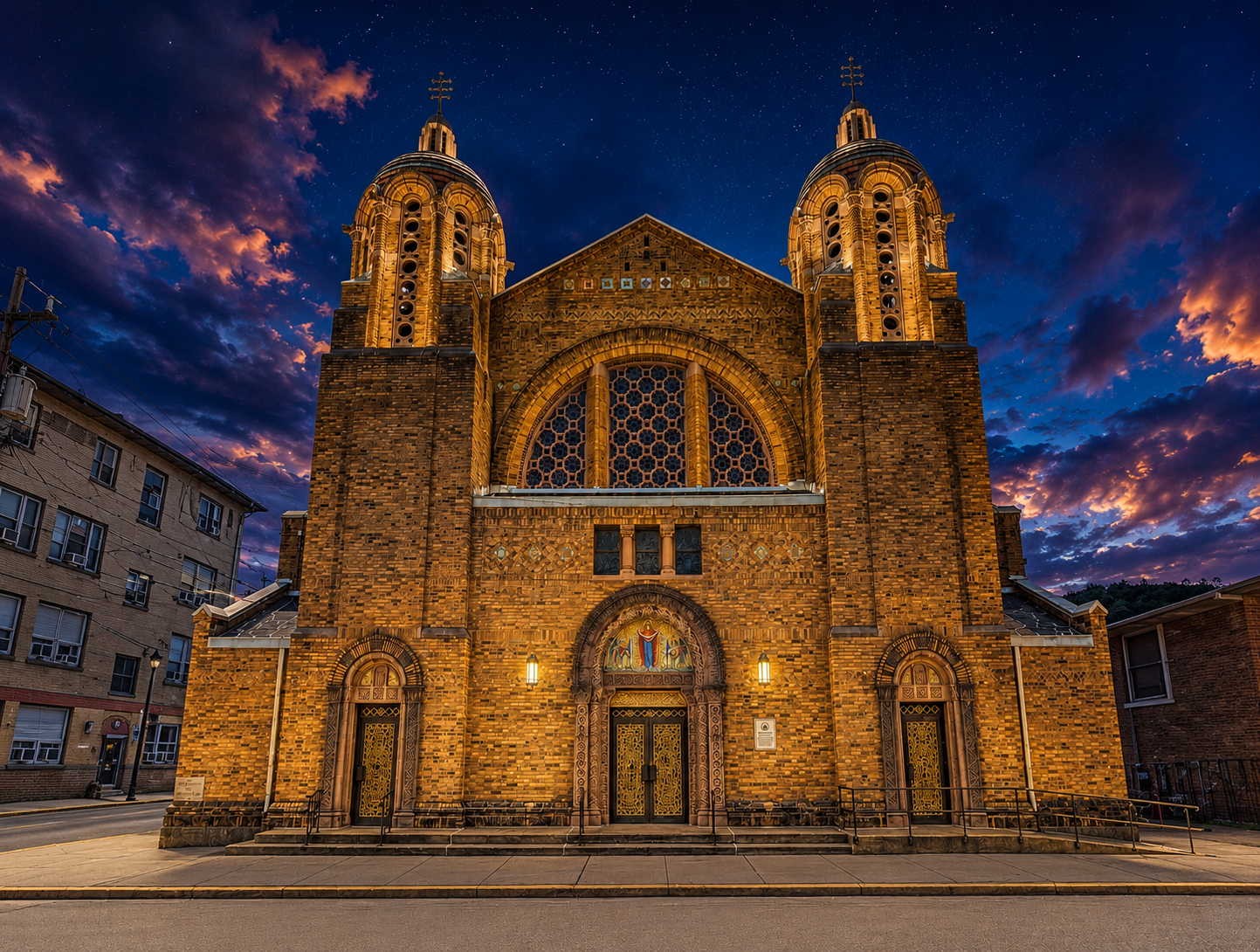
Standing prominently in the heart of historic Cambria City, this remarkable church is much more than a place of worship. It is a monument to faith, craftsmanship, perseverance, and the generations of immigrant families who helped build Johnstown into one of America’s great steel cities. The first time sunlight catches its warm golden brickwork—or the building glows beneath an evening sky—you quickly understand why so many photographers consider it one of the city’s most extraordinary landmarks.
Today, St. Mary’s Byzantine Catholic Church remains one of the finest examples of Byzantine Revival architecture in western Pennsylvania and one of Johnstown’s true architectural treasures.
A Church Built by a Growing Community
The story of St. Mary’s begins in 1895, when Father Hilarion Dzubay established a parish to serve Byzantine Catholic immigrants arriving from regions that are now part of eastern Slovakia, western Ukraine, and neighboring areas of Central Europe. Drawn by opportunities in Johnstown’s booming steel industry, these families brought with them a rich spiritual tradition that had been preserved for centuries.
Their first church, dedicated that same year, quickly became too small. A larger church followed in 1901, but rapid parish growth soon filled that building as well. Rather than simply expand again, parish leaders envisioned something extraordinary—a church that would honor their heritage while becoming a lasting symbol of their faith.
The result was the magnificent structure that stands on Power Street today.
Dedicated on Thanksgiving Day, November 30, 1922, the new church was designed to seat approximately 900 worshippers and was modeled after the famed Hagia Sophia of Constantinople, one of the most influential churches ever constructed.
Byzantine Beauty in the Heart of Johnstown
Unlike many Gothic churches throughout Pennsylvania, St. Mary’s embraces the architecture of the Christian East.
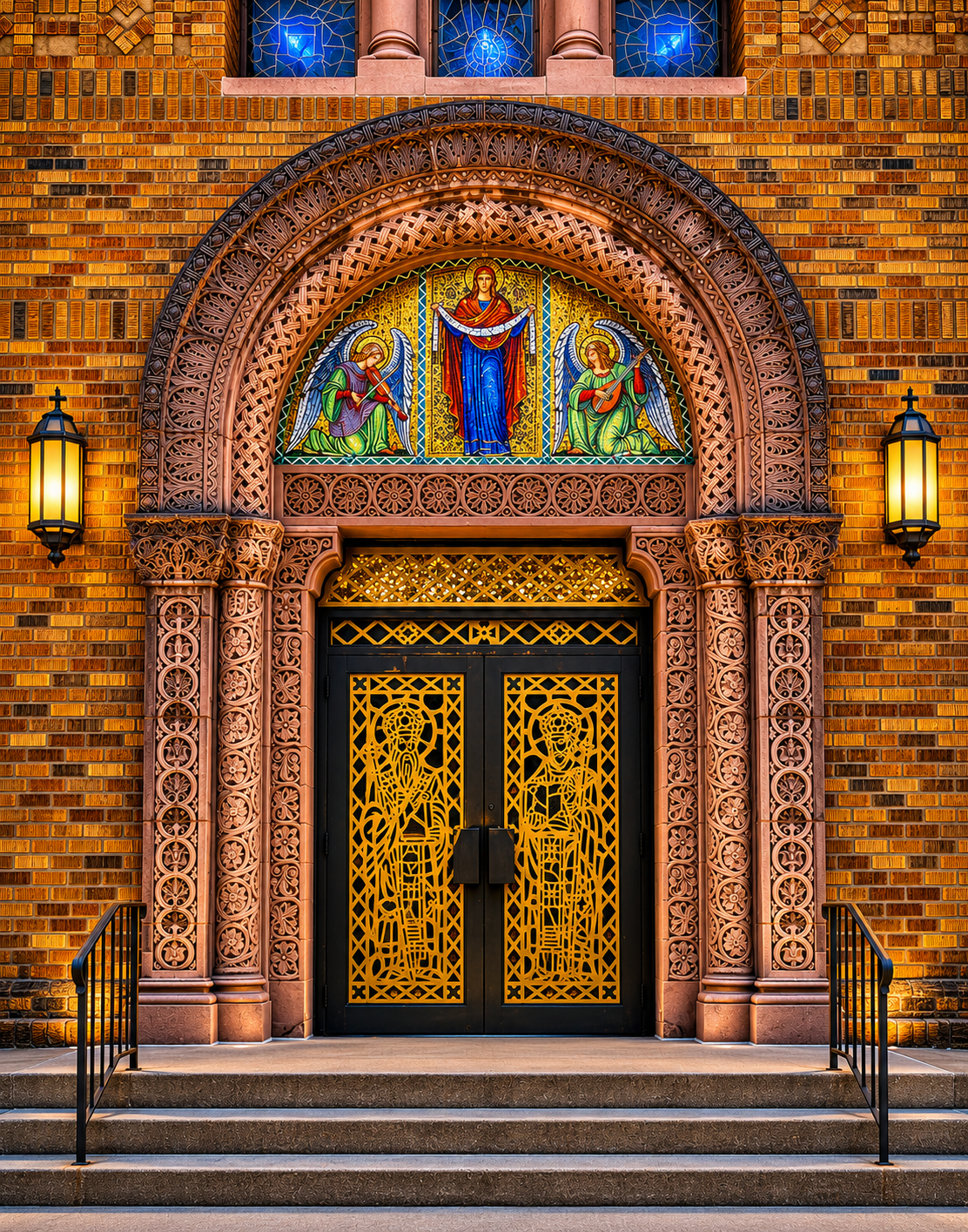
Its twin towers frame an imposing façade of intricate brickwork, decorative stone, and graceful arches. The enormous stained-glass window dominates the front elevation, while richly detailed carvings and colorful mosaics above the main entrance invite visitors into another world.
Every angle offers something new to discover.
Stand directly in front of the church and you’ll notice the remarkable symmetry of its façade. Walk around its perimeter and the massive dome, curved rooflines, and layered masonry reveal themselves as works of art in their own right. Heritage Johnstown highlights these distinctive Byzantine features—including the large dome, elaborate brickwork, and Moorish-inspired windows—as defining characteristics of the building.
A Magnificent Interior
While the exterior is breathtaking, the interior is where many visitors truly fall in love with St. Mary’s.
A soaring central dome rises overhead while richly colored icons surround the sanctuary. The iconostasis—the beautifully decorated screen separating the sanctuary from the nave—is one of the defining features of Byzantine churches and serves as both a theological and artistic masterpiece.
Golden light reflects from chandeliers, painted icons, and stained glass to create an atmosphere that feels timeless.
Whether you visit for worship or simply appreciate historic architecture, the interior offers an unforgettable experience.
Surviving Johnstown’s Greatest Challenges
Like the city itself, St. Mary’s has endured remarkable hardships.
The parish survived the devastating Johnstown floods of both 1936 and 1977. Despite these disasters, the congregation rebuilt, restored, and continued serving the community while remaining faithful to its Byzantine Catholic traditions.
For well over a century, weddings, baptisms, funerals, feast days, and family celebrations have taken place beneath its domes.
The church has become woven into the history of countless Johnstown families.
More Than a Church
St. Mary’s has long served as a cultural center for Cambria City.
Its annual Cambria City Ethnic Festival welcomes thousands of visitors with traditional foods, music, church tours, and opportunities to experience the customs brought to Johnstown by generations of Eastern European immigrants.
Nearby stands another powerful reminder of resilience: a steel beam recovered from the World Trade Center after the September 11 attacks, preserved on the church grounds as a memorial to the victims and heroes of that day.
A Photographer’s Dream
For photographers, St. Mary’s is one of the most rewarding subjects in western Pennsylvania.
Morning light beautifully illuminates the eastern façade. Sunset casts warm tones across the brickwork, while blue hour transforms the church into a glowing beacon against the evening sky. After dark, carefully placed lighting accentuates the building’s intricate textures and architectural details.
Every season offers something different:
- Spring blossoms frame the historic façade.
- Summer skies create dramatic backdrops.
- Autumn colors complement the warm brick.
- Winter snow gives the church a serene, timeless beauty.
Inside, every arch, icon, and beam of light offers another composition waiting to be captured.
A Lasting Symbol of Johnstown
Johnstown is filled with remarkable landmarks—the Stone Bridge, the Inclined Plane, the Flood Museum, and the city’s many historic churches—but St. Mary’s Byzantine Catholic Church stands among the very finest.
It tells the story of immigration, faith, craftsmanship, perseverance, and community.
More than a century after its dedication, it continues to inspire worshippers, historians, artists, and photographers alike.
Whether you are exploring Cambria City for the first time or have lived in Johnstown your entire life, take a moment to stand before St. Mary’s on Power Street. Look up at its soaring towers, admire the extraordinary brickwork, and imagine the generations of families who built this magnificent church by hand.
It is not simply one of Johnstown’s most beautiful buildings—it is one of the city’s greatest works of art.