
Vintage Johnstown Postcards: Little Windows into the City’s Past
Long before social media, text messages, and digital photography, people shared their travels and everyday experiences through postcards. A colorful picture on the front, a few handwritten lines on the back, and a postage stamp were all that was needed to send a small piece of Johnstown across Pennsylvania—or around the world.
Today, vintage Johnstown postcards are more than charming collectibles. They are miniature historical documents that preserve the city’s streets, buildings, bridges, businesses, neighborhoods, and people as they appeared generations ago.
Each card offers a brief but fascinating glimpse into a Johnstown that was constantly growing, rebuilding, and reinventing itself.
The Golden Age of the Picture Postcard
Picture postcards became especially popular in the United States near the end of the nineteenth century. The Library of Congress notes that its postcard collections are particularly strong from the late 1800s through the mid-1930s—a period often associated with America’s great postcard boom.
During this era, postcards were inexpensive, easy to mail, and available almost everywhere. Visitors purchased them at hotels, train stations, drugstores, newsstands, restaurants, and local attractions. Residents also used them as a convenient way to send quick notes to relatives and friends.
For Johnstown, this period coincided with decades of dramatic change. The city was becoming nationally known for its steel industry, remarkable engineering, crowded downtown streets, impressive architecture, and extraordinary ability to recover from disaster.
Postcard publishers found no shortage of subjects.
A City Made for Postcards
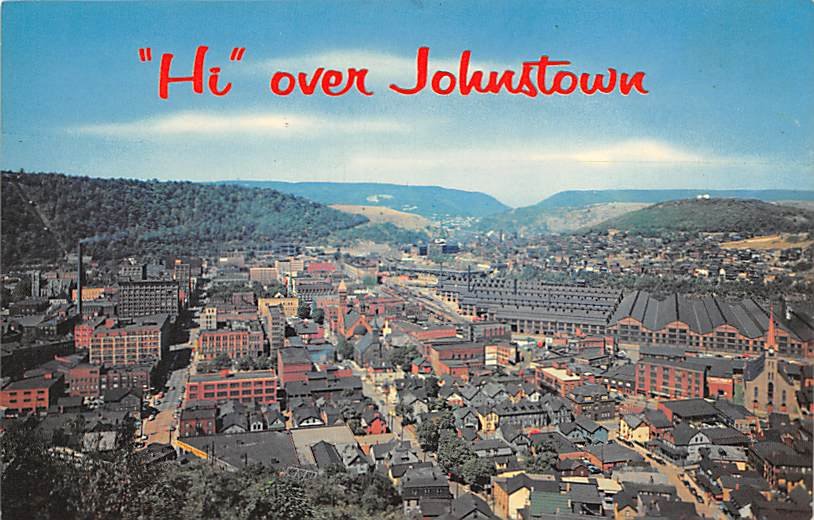
Johnstown has always been a visually distinctive city. Its steep hills, river valleys, industrial buildings, bridges, churches, neighborhood streets, and monumental public structures created scenes that were immediately recognizable.
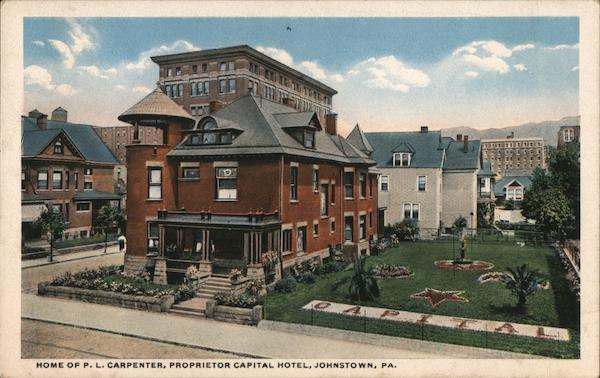
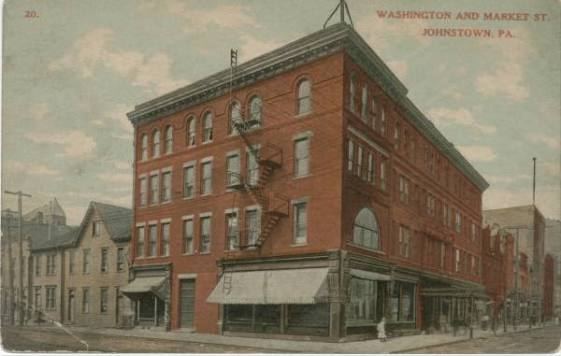
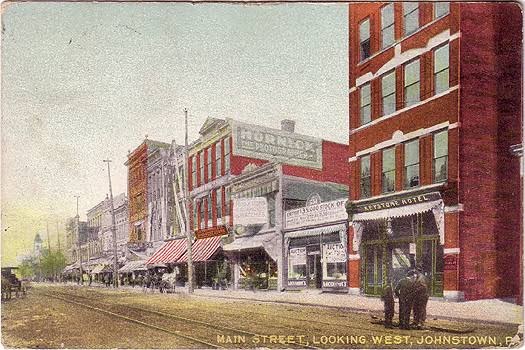
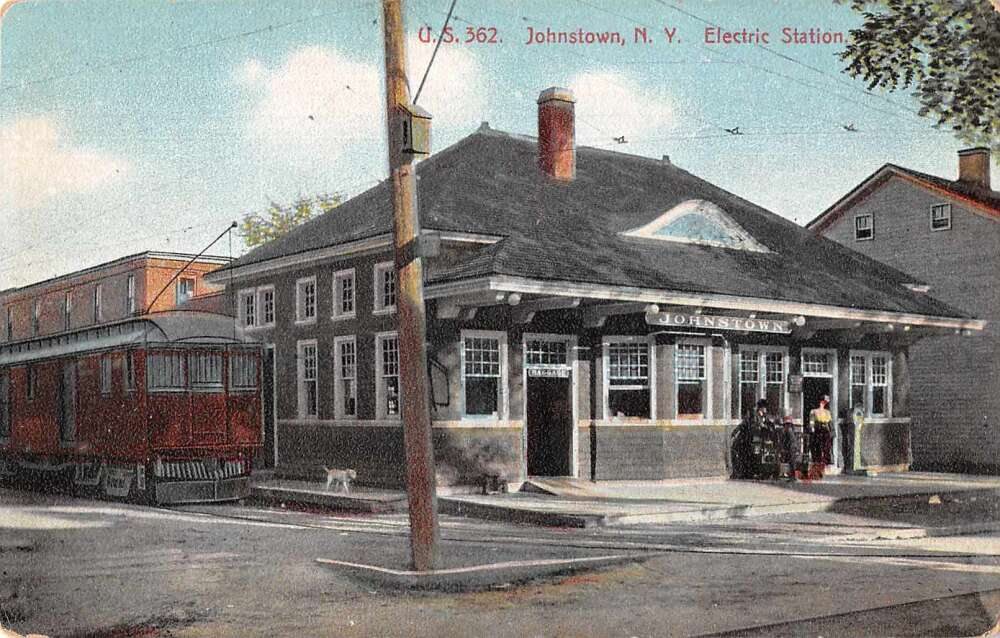
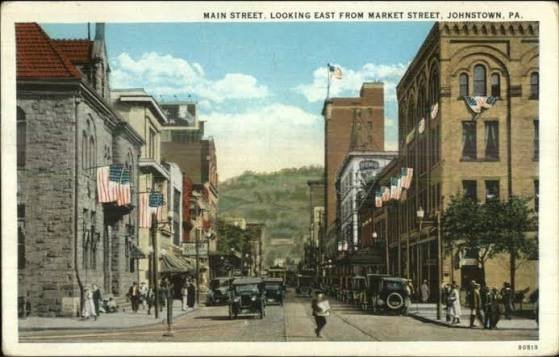
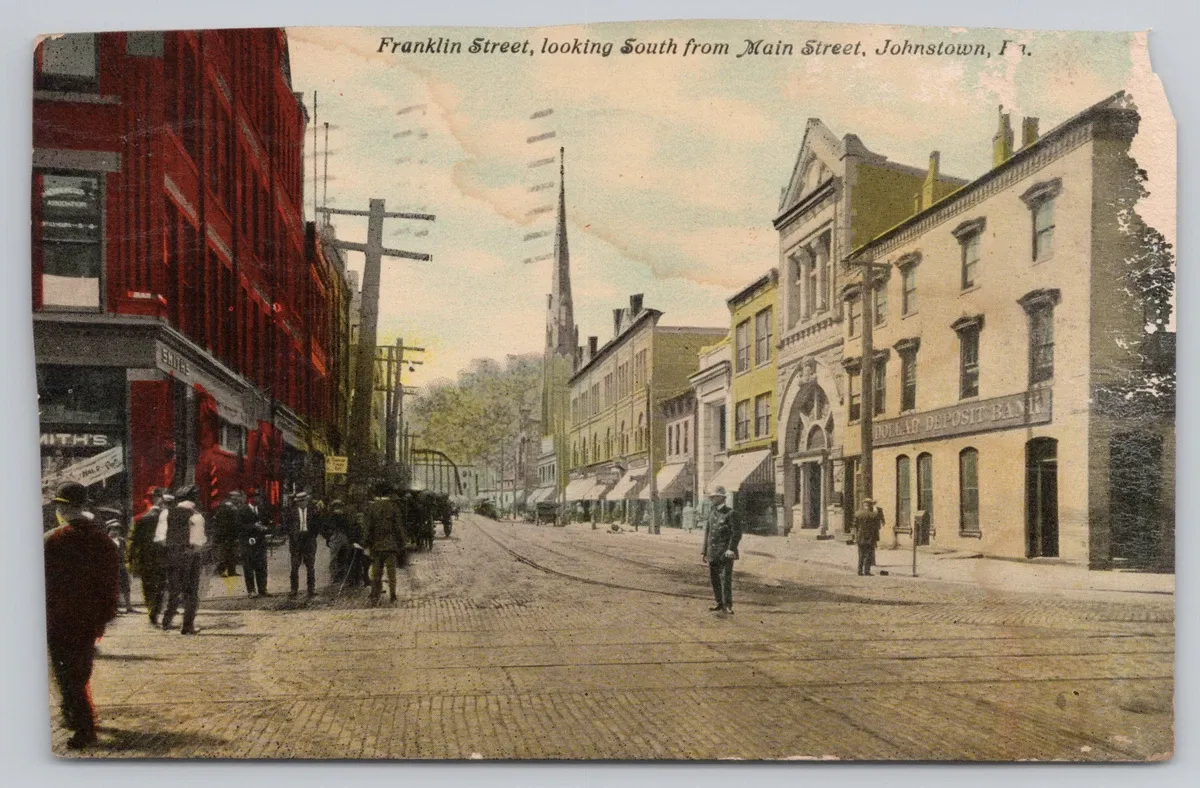
Vintage postcards frequently featured prominent downtown buildings, hotels, schools, churches, department stores, railroad facilities, and civic landmarks. Some showed broad views of Main Street filled with pedestrians, early automobiles, and streetcars. Others focused on the city’s residential neighborhoods, where ornate Victorian houses stood along tree-lined streets.
The Johnstown Train Station was another natural postcard subject. Heritage Johnstown preserves a historic postcard of the station dated 1924, demonstrating how the building served not only as a transportation center but also as a symbol of Johnstown’s importance and civic pride.
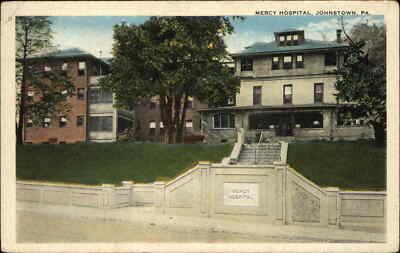
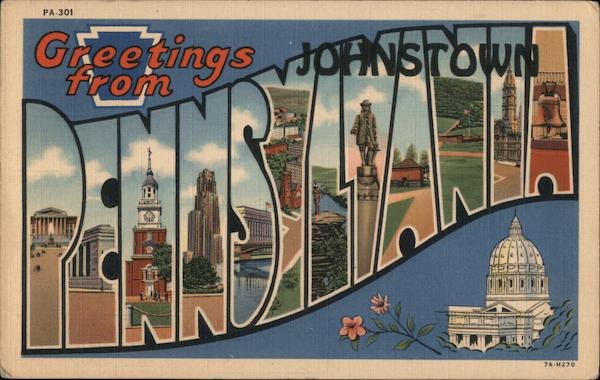
Other cards celebrated local parks, hospitals, libraries, bridges, and schools. Even ordinary street corners became worthy of attention when photographed, carefully tinted, and printed beneath an elegant caption reading, “Johnstown, Pennsylvania.”
The Inclined Plane: Johnstown’s Postcard Superstar
Few Johnstown landmarks have appeared on more postcards than the Johnstown Inclined Plane.
Construction began in 1890 under the Cambria Iron Company, and the Inclined Plane began carrying passengers, horses, and wagons between the city and the hilltop community of Westmont on June 1, 1891.
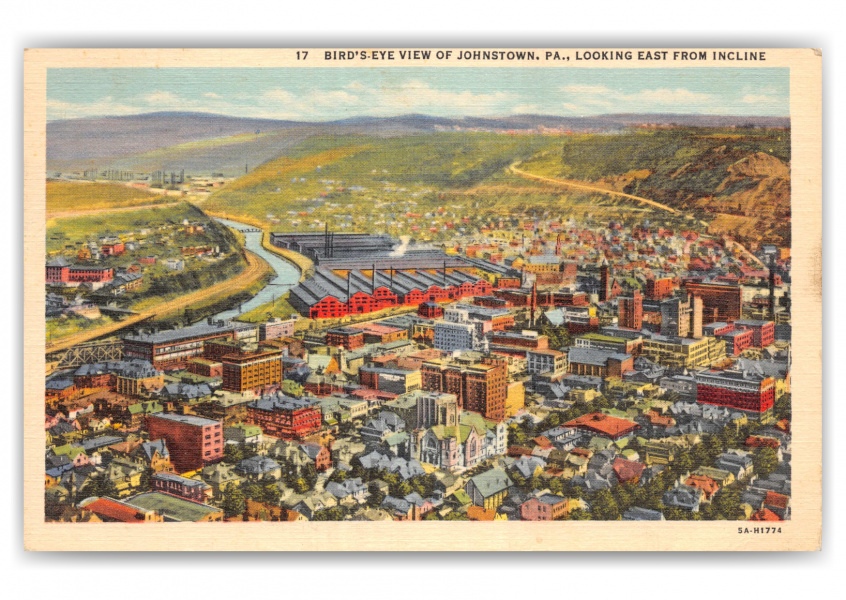
Its unusual design and dramatic position above the city made it an ideal postcard image. Some cards showed the massive cars climbing Yoder Hill. Others presented sweeping views of Johnstown from the upper station. Publishers often enhanced the sky, buildings, and surrounding hills with vivid hand-applied or printed colors.
These images did more than advertise an attraction. They presented Johnstown as a city of engineering, progress, and determination. The Inclined Plane became—and remains—one of the community’s most recognizable visual symbols.
The Stone Bridge and the Memory of the Flood
The Stone Bridge also appears frequently in Johnstown’s historical imagery. Its massive arches, industrial surroundings, and location across the Conemaugh River gave postcard photographers a powerful composition.
The bridge also carried profound historical meaning because of its association with the Johnstown Flood of May 31, 1889. When the South Fork Dam failed, approximately 20 million tons of water rushed through the Conemaugh Valley toward Johnstown. The disaster claimed 2,209 lives and destroyed approximately 1,600 homes.
Early photographs and stereoscopic images documented the destruction around the bridge and throughout the city. One surviving Library of Congress image is titled The Bridge of Death, Johnstown, Pa., U.S.A., reflecting the grim name associated with the debris and fire that accumulated there during the disaster.
Later postcards presented the Stone Bridge in calmer times—sometimes illuminated, sometimes surrounded by industrial activity, and sometimes viewed from the hills above the city. Together, these images show how a place associated with tragedy gradually became a lasting symbol of endurance.
Steel Mills, Smoke, and Industrial Pride
While modern viewers may be surprised to see factories pictured on postcards, industrial scenes were once symbols of prosperity and civic achievement.
Johnstown’s steel mills, railroad yards, furnaces, smokestacks, and sprawling industrial complexes demonstrated the city’s economic strength. Publishers often portrayed these scenes proudly, emphasizing the scale of the mills and the dramatic landscape created by smoke, fire, steel, rivers, and mountains.
A postcard showing the mills was not necessarily considered bleak or unattractive. To many residents, it represented employment, craftsmanship, invention, and the labor that supported generations of families.
These industrial postcards are especially valuable today because many of the buildings, machinery, rail lines, and working environments they depict have disappeared or changed beyond recognition.
Hand-Colored Memories
Many early postcards began as black-and-white photographs that were later colored by hand or through mechanical printing processes. Publishers added bright blue skies, green hills, red brick, golden sunsets, and softly glowing windows.
The results were not always completely realistic. Colors might be exaggerated, buildings could appear cleaner than they were, and a dramatic sunset might be added to an otherwise ordinary afternoon.
That imaginative quality is part of their charm.
Vintage postcards exist somewhere between photography and illustration. They show the physical city, but they also show how publishers wanted the city to be remembered: prosperous, welcoming, impressive, and beautiful.
Messages from Everyday Life
The reverse side of a vintage postcard can be just as interesting as the picture.
A message might announce a safe arrival, describe a train journey, mention the weather, send birthday wishes, or promise a longer letter soon. Some cards contain only a few hurried words:
“Having a wonderful time.”
“Arrived safely.”
“This is where we stayed.”
“Johnstown is a busy place.”
Postmarks, stamps, handwriting, and addresses can reveal when the card traveled and who received it. For genealogists and family historians, these details can provide valuable clues about relatives, friendships, residences, vacations, and everyday routines.
A simple postcard may connect a recognizable Johnstown landmark with the personal story of someone who stood there more than a century ago.
What Collectors Look For
Collectors of vintage Johnstown postcards are drawn to many different subjects. Some search for particular neighborhoods, streets, churches, schools, bridges, hotels, or businesses. Others collect flood-related images, transportation scenes, steel-industry views, real-photo postcards, or cards produced by specific publishers.
Condition affects a card’s appeal, but it is not everything. A worn card with a rare image may be more historically important than a pristine card showing a familiar landmark. A handwritten message identifying a house, business owner, or local event can make an otherwise ordinary card especially meaningful.
When examining an old postcard, look closely at:
- Street signs and business names
- Architectural details
- Automobiles, wagons, and streetcars
- Clothing and advertisements
- Publisher information
- Postmarks and postage stamps
- Handwritten names and addresses
- Buildings that have since been altered or demolished
A magnifying glass or high-resolution scan may reveal details that are easy to miss at first glance.
Preserving Johnstown’s Postcard History
Local organizations continue to protect and digitize historical materials connected to Johnstown and Cambria County. Heritage Johnstown maintains archives and museum collections covering the Greater Johnstown area, while the Johnstown Area Genealogical and Historical Society’s digital resources include maps, brochures, commemorative booklets, postcards, and other materials from its collection.
The Cambria Memory Project has also worked to collect and digitize historical items associated with the county, including photographs and documents connected to the 1889 flood.
Private collectors play an important role as well. By scanning cards, identifying locations, researching publishers, and sharing images with the community, collectors help keep these small pieces of history from disappearing into forgotten boxes and drawers.
Old postcards should be stored in archival-quality sleeves away from direct sunlight, moisture, and extreme temperatures. Writing directly on the card or attaching tape can permanently damage it.
More Than a Souvenir
A vintage Johnstown postcard is a tiny time capsule.
It can show us a vanished storefront, a newly constructed church, a busy streetcar line, a grand hotel, a neighborhood before modern development, or a familiar landmark surrounded by buildings that no longer exist.
Taken together, these cards form a visual history of Johnstown—one image and one handwritten message at a time.
They remind us that the city has always been worthy of being photographed, painted, collected, shared, and remembered. The people who mailed these cards may never have imagined that someone would still be studying them a century later. Yet their simple souvenirs now help us understand how Johnstown looked, how it changed, and how its residents saw their hometown.
Continuing the Tradition
Modern Johnstown postcards continue the same tradition begun generations ago. The photographs, paintings, and designs created today will eventually become historical records of their own.
A postcard purchased in Johnstown in 2026 may one day show a future collector what the city looked like, what its residents valued, and which places inspired its artists.
That is the enduring magic of the postcard. It is small enough to hold in one hand, yet powerful enough to carry the image and spirit of an entire city through time.
The Art of Johnstown celebrates the buildings, landmarks, neighborhoods, businesses, natural beauty, and creative spirit that make Johnstown, Pennsylvania, unlike any other place.